This tp link ax3000 review looks at the RE715X for households trying to improve Wi-Fi coverage in rooms where their router struggles to reach.
Its dual-band Wi-Fi 6, Gigabit Ethernet port, and EasyMesh compatibility make it a flexible extender, though it is designed to extend coverage rather than raise the speed of an internet plan.
TP-Link RE715X Review Summary
The quick verdict
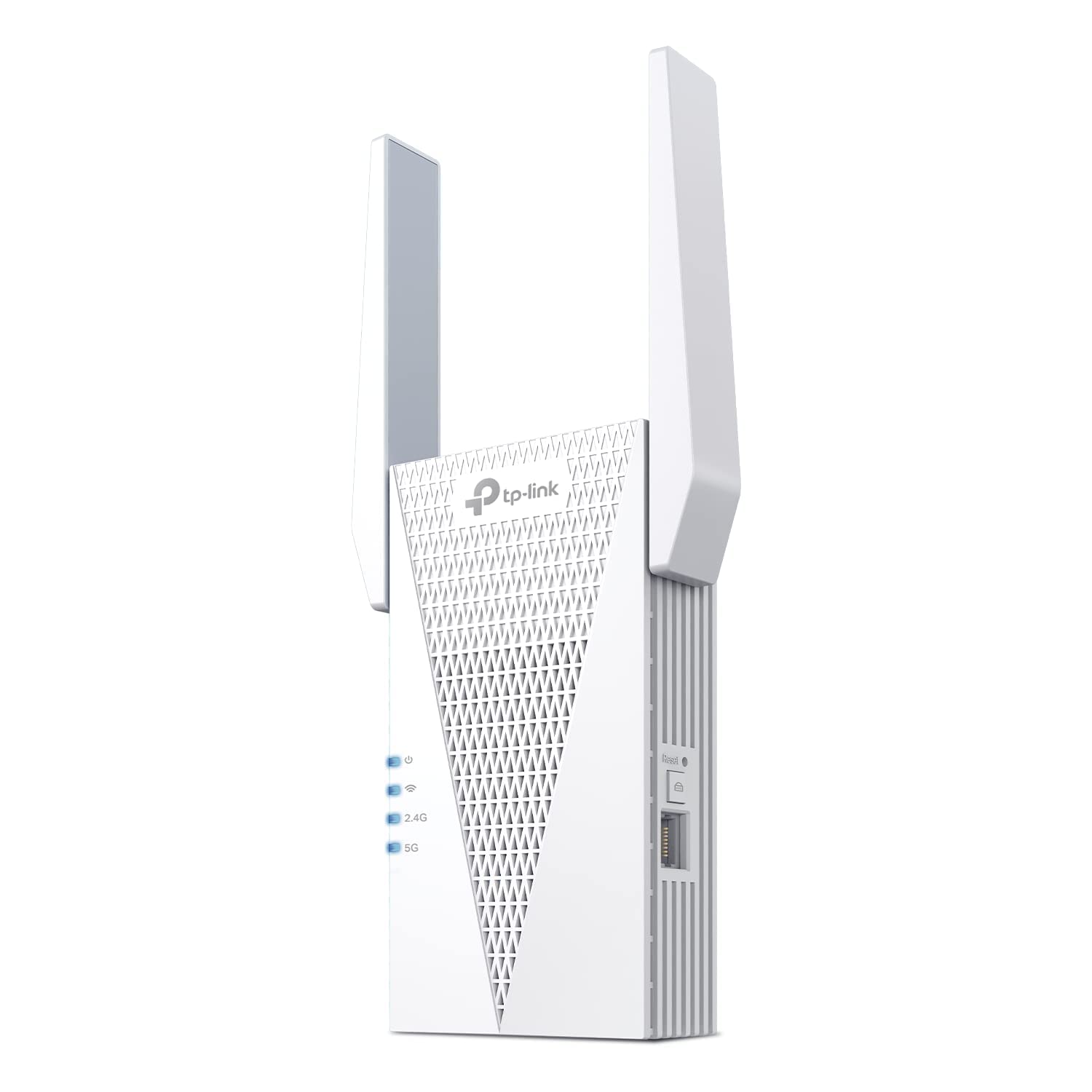
4,000+ ratings
Read Amazon ReviewsTP-Link RE715X
A fit for households looking to extend Wi-Fi coverage, connect a wired device, or build an EasyMesh network with a compatible router.
- Dual-band Wi-Fi 6 with listed maximum speeds of up to 2,404 Mbps on 5 GHz and up to 574 Mbps on 2.4 GHz.
- Coverage advertised up to 2,400 square feet and support for up to 64 devices.
- Two high-gain directional antennas and Beamforming technology.
- Gigabit Ethernet port for connecting a wired device or using Access Point mode to create a Wi-Fi hotspot from a wired connection.

Pros
- Offers a broad stated coverage area and dual-band Wi-Fi 6 for addressing weak-signal rooms.
- Includes a Gigabit Ethernet port, adding a wired connection option at the extender's location.
Consider before buying
- An extender improves coverage rather than increasing the speed supplied by the internet connection; the description cautions that actual speeds may be 50% or less of current speeds.
- EasyMesh use depends on having a compatible router, and the RE715X is not compatible with Deco mesh systems.
Read the full review summary
The RE715X combines two Wi-Fi bands, directional antennas with Beamforming, and support for up to 64 devices.
Its advertised coverage is up to 2,400 square feet, but placement, walls, distance, and the existing connection affect what a home actually gets.
An extender works best when it can still receive a useful signal from the router, so its location matters as much as its headline coverage figure.
It is suited to homes with a specific weak-coverage area, especially when the router supports EasyMesh or a device in the extended area can connect through Ethernet.
Setup and management use the TP-Link Tether app, which includes a signal indicator for finding a location. Buyers should plan around coverage improvement, not expect the extender to create faster internet or preserve the router's full throughput.
The buying factors
TP-Link RE715X Scorecard
Editorial scores reflect listed features and buyer fit; they are not laboratory measurements or customer ratings.
Coverage features
Two high-gain directional antennas and Beamforming support the coverage-focused design, with coverage listed up to 2,400 square feet.
Wi-Fi capacity
Dual-band Wi-Fi 6 offers up to 2,404 Mbps on 5 GHz and 574 Mbps on 2.4 GHz, subject to real-world conditions.
Wired connectivity
The Gigabit Ethernet port can connect a wired device or provide a wired connection for Access Point mode.
Mesh flexibility
EasyMesh compatibility can help integrate the extender with a compatible router, but it does not work with Deco mesh systems.
Setup guidance
The Tether app provides setup and a signal indicator to help identify a suitable placement.
Speed expectations
The product is intended to extend coverage, and the provided description cautions that actual extender speeds may be 50% or less of current speeds.
Key Features and Specifications of TP-Link RE715X
- Dual-band Wi-Fi 6 with listed maximum speeds of up to 2,404 Mbps on 5 GHz and up to 574 Mbps on 2.4 GHz.
- Coverage advertised up to 2,400 square feet and support for up to 64 devices.
- Two high-gain directional antennas and Beamforming technology.
- Gigabit Ethernet port for connecting a wired device or using Access Point mode to create a Wi-Fi hotspot from a wired connection.
- EasyMesh compatibility with compatible routers; not compatible with TP-Link Deco mesh systems.
- TP-Link Tether app setup and an intelligent signal indicator for positioning.
- Smart Adaptive Roaming is designed to connect devices automatically to the strongest signal.
Pros and Cons of TP-Link RE715X
Pros
- Offers a broad stated coverage area and dual-band Wi-Fi 6 for addressing weak-signal rooms.
- Includes a Gigabit Ethernet port, adding a wired connection option at the extender's location.
- Can work with compatible EasyMesh routers for a more integrated network setup.
- The app's signal indicator gives buyers a practical guide for testing placement.
Consider before buying
- An extender improves coverage rather than increasing the speed supplied by the internet connection; the description cautions that actual speeds may be 50% or less of current speeds.
- EasyMesh use depends on having a compatible router, and the RE715X is not compatible with Deco mesh systems.
- The up-to coverage and speed figures depend on conditions such as distance and obstacles, so they should not be treated as guaranteed room-by-room results.
Who Should Buy TP-Link RE715X?
Good fit
Consider the RE715X if your router provides adequate service in one part of the home but struggles to reach a particular room or area.
Its dual bands and stated coverage capacity make it a reasonable match for extending an existing network, while the signal indicator can help you try different outlet locations.
A spot with a stable connection to the router is a sensible starting point.
It is also worth considering if you want an Ethernet connection near a television, console, or other wired device, or if your router supports EasyMesh.
Access Point mode is another option when a wired network connection is available where you need Wi-Fi. Check your router's mesh compatibility before choosing it for a mesh setup.
Who should skip it
Skip it if your main goal is to increase your internet plan's speed or deliver the router's full throughput to a distant room.
The product description sets expectations for reduced speeds through an extender, and a weak signal at the extender's chosen location can limit the benefit.
Choose another approach if you need an EasyMesh setup but your router is not compatible, or if your home uses a Deco mesh system. Confirm the network design you want before buying.
How the TP-Link RE715X Fits a Home Wi-Fi Setup
Coverage depends on placement
The RE715X is meant to relay Wi-Fi into areas the router does not reach well.
Its up-to 2,400-square-foot coverage figure is a maximum rather than a promise for a particular floor plan: walls, distance, and the signal available at the extender all matter.
Use the app's indicator to compare possible locations, keeping the unit close enough to receive a useful router signal while still moving coverage toward the problem area.
Wi-Fi 6 figures need context
The listed band limits—up to 2,404 Mbps on 5 GHz and 574 Mbps on 2.4 GHz—describe the extender's advertised wireless capacity, not a guaranteed internet speed.
The product is intended to improve reach, and its description warns that actual speeds can be 50% or less of current speeds.
That makes it a better fit for filling a coverage gap than for solving a slow broadband connection.
Ethernet and Access Point options
The Gigabit Ethernet port gives the RE715X a useful role beyond wireless repeating. A nearby wired device can connect through the port, and Access Point mode can turn a wired connection into Wi-Fi.
These options are most relevant when Ethernet is available at the location; without it, the extender relies on its wireless link to the router.
Mesh compatibility is specific
EasyMesh compatibility may help the RE715X fit into a compatible router setup, and Smart Adaptive Roaming is designed to move devices toward the strongest signal.
Compatibility is not universal across mesh families: the product description specifically excludes Deco systems. Check the router model and desired network arrangement before buying if seamless mesh operation is a priority.
Alternatives to TP-Link RE715X
Repeaters alternative
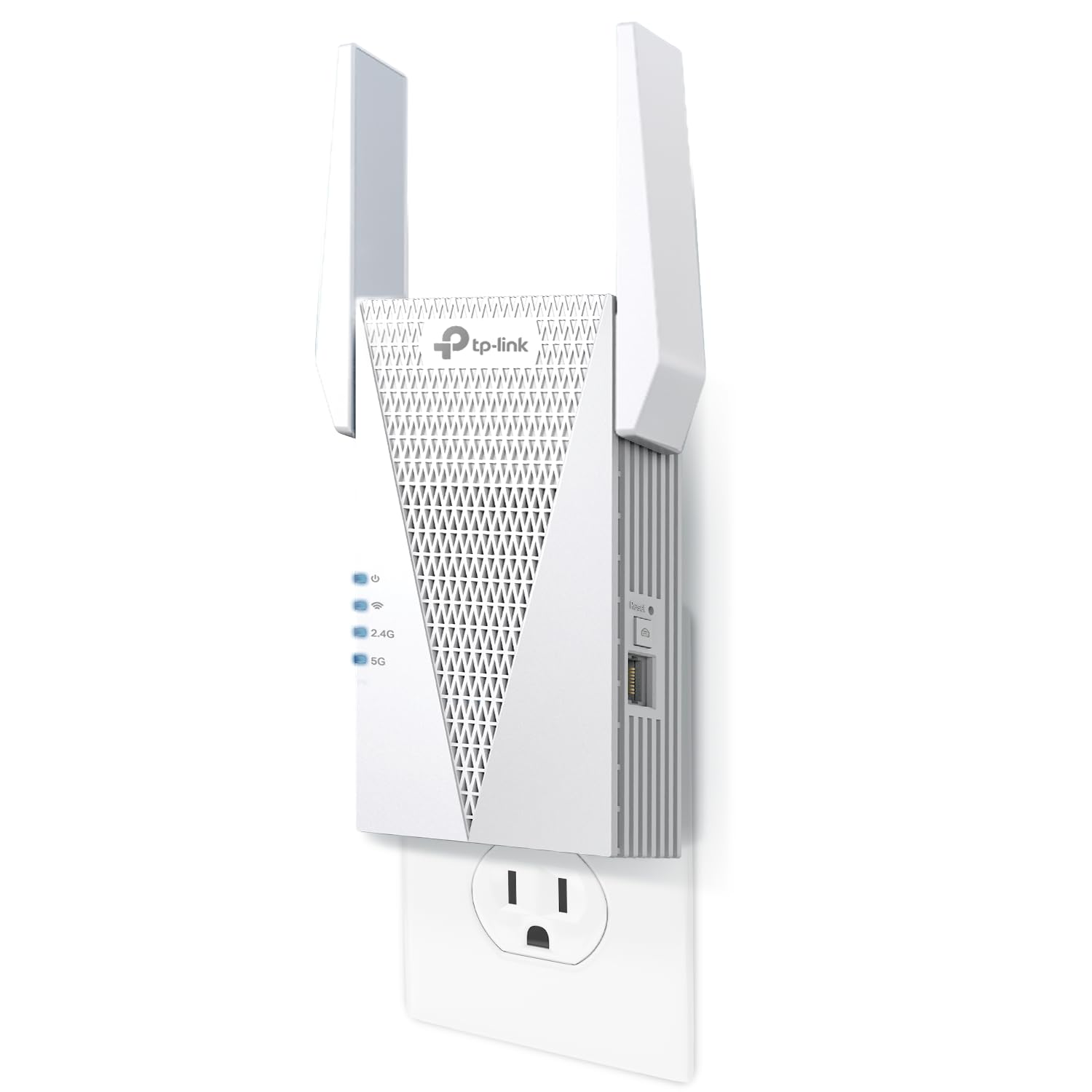
1,000+ ratings
Read Amazon ReviewsTP-Link RE615X AX1800 Wi-Fi 6 Range Extender
Consider the RE615X if its lower listed 5 GHz capacity and coverage figure suit your needs. The RE715X is the stronger fit on the listed wireless capacity and coverage, while both offer a wired port and EasyMesh compatibility.
- The RE615X lists up to 1,201 Mbps on 5 GHz, 574 Mbps on 2.4 GHz, and coverage up to 2,100 square feet.
- It also has a Gigabit Ethernet port, EasyMesh compatibility, and Tether app setup.
- The RE715X lists up to 2,404 Mbps on 5 GHz, 574 Mbps on 2.4 GHz, and coverage up to 2,400 square feet.
Repeaters alternative
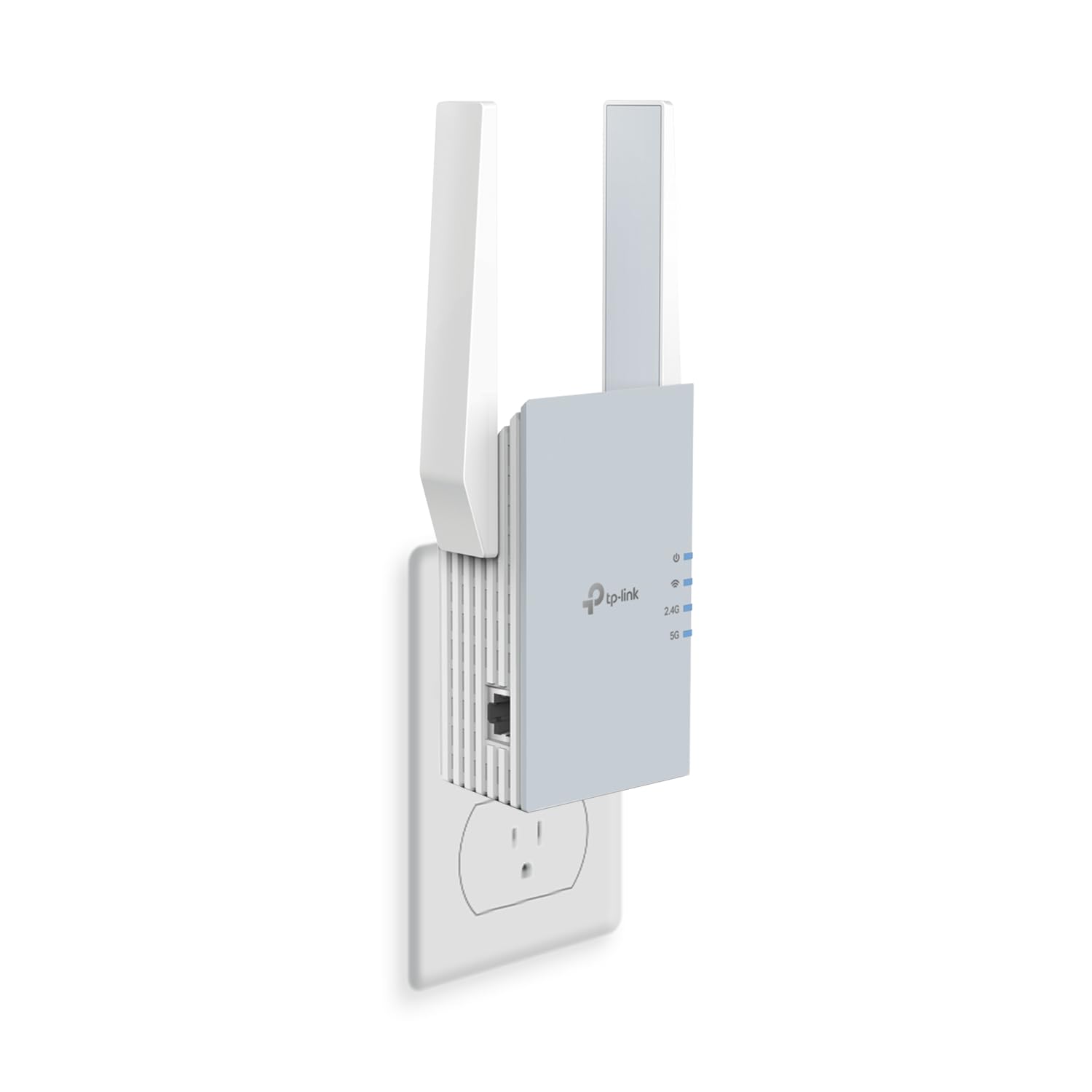
400+ ratings
Read Amazon ReviewsTP-Link RE515X AX1500 Wi-Fi 6 Range Extender
The RE515X is a more limited match on listed band speeds and coverage, but it may suit a smaller area where those figures are adequate. Choose the RE715X if you want the higher stated capacity and coverage.
- The RE515X lists up to 1,201 Mbps on 5 GHz, 300 Mbps on 2.4 GHz, and coverage up to 1,800 square feet.
- It includes a Gigabit Ethernet port, Access Point mode, EasyMesh compatibility, and Tether app setup.
- The RE715X lists up to 2,404 Mbps on 5 GHz, 574 Mbps on 2.4 GHz, and coverage up to 2,400 square feet.
Is TP-Link RE715X Worth It?
The TP-Link RE715X is worth considering when the problem is Wi-Fi coverage in a specific part of the home and you want dual-band Wi-Fi 6, a Gigabit Ethernet port, or compatibility with an EasyMesh router.
Its app-guided placement and Access Point mode add flexibility for different layouts.
Buy with realistic expectations: an extender can improve reach, but its speed depends on the router connection, placement, and home conditions.
If you need higher internet speed rather than broader coverage, or your mesh system is Deco, this model is unlikely to address your main need.
Your review at a glance
4,000+ ratings
Read Amazon ReviewsTP-Link RE715X
A fit for households looking to extend Wi-Fi coverage, connect a wired device, or build an EasyMesh network with a compatible router.
- Dual-band Wi-Fi 6 with listed maximum speeds of up to 2,404 Mbps on 5 GHz and up to 574 Mbps on 2.4 GHz.
- Coverage advertised up to 2,400 square feet and support for up to 64 devices.
- Two high-gain directional antennas and Beamforming technology.
- Gigabit Ethernet port for connecting a wired device or using Access Point mode to create a Wi-Fi hotspot from a wired connection.