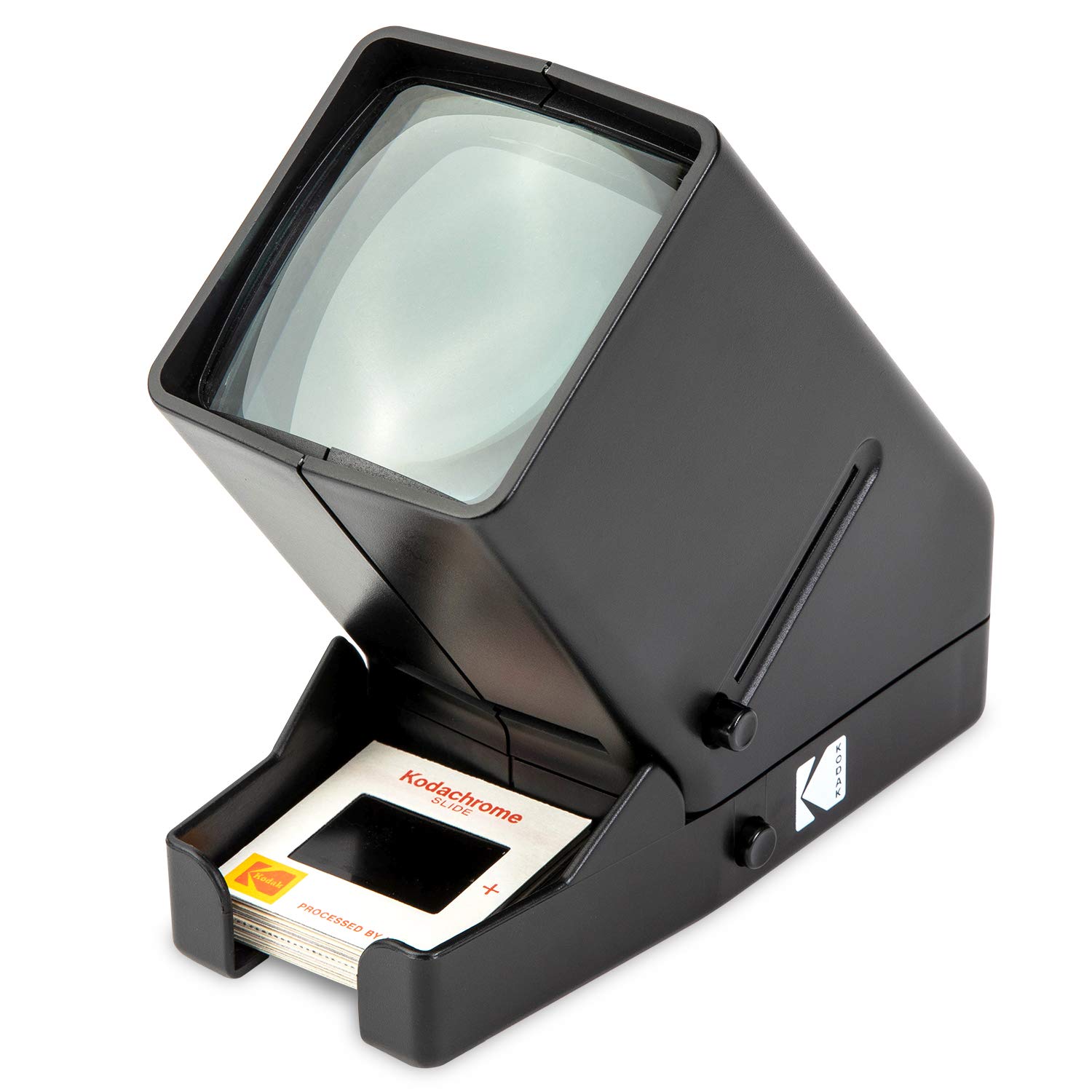
The Kodak 35mm Slide & Film Viewer is a straightforward way to look through old slides and film negatives, with a built-in light and magnifier for viewing one image at a time.
This Kodak 35mm Slide & Film Viewer review considers whether its simple, portable design fits your archiving and reminiscing routine.
Kodak Slide Viewer Review Summary
The quick verdict
3,000+ ratings
Read Amazon ReviewsKodak 35mm Slide & Film Viewer
A portable, battery-operated viewer for families and film owners who want to inspect 35mm slides and negatives without setting up a projector.
- Designed to view 35mm slides and film negatives.
- Built-in magnifier enlarges the image by 3X.
- Large viewing area uses daylight LED illumination.
- Dedicated slide slot and film input allow frames to be inserted for viewing.

Pros
- Combines lighting and magnification in one handheld device.
- Accepts both 35mm slides and film negatives.
Consider before buying
- Viewing is frame by frame, so it may feel slow when reviewing a large archive.
- The DC cable is sold separately, which matters if you prefer to power it from an outlet.
Read the full review summary
This handheld viewer combines a dedicated slide slot, a film input, daylight LED illumination, and 3X magnification. Its main appeal is convenience: insert a frame, inspect it through the viewer, and use the quick-eject button to move on.
Battery operation also makes it easier to use away from a desk, while optional DC power is available with a separately sold cable.
It suits people who want to preview or share 35mm material without assembling a projection setup.
The single-frame viewing format is practical for casual sorting and family conversations, but it is not described as a scanning or digitizing device.
Buyers should also consider whether the viewing area and handheld style are comfortable for the length of time they expect to spend examining their collection.
The buying factors
Kodak Slide Viewer Scorecard
Editorial scores reflect listed features and buyer fit; they are not laboratory measurements or customer ratings.
Ease of viewing
A dedicated slot and film input support a simple insert-and-view routine.
Image enlargement
The built-in lens provides 3X magnification for small frames.
Illumination
Daylight LED lighting is integrated into the viewing area.
Portability
Battery operation supports use away from a fixed power point.
Frame-to-frame handling
A quick-eject button is intended to help move between slides.
Collection workflow
It is designed for viewing individual frames, with no digitizing workflow described.
Key Features and Specifications of Kodak Slide Viewer
- Designed to view 35mm slides and film negatives.
- Built-in magnifier enlarges the image by 3X.
- Large viewing area uses daylight LED illumination.
- Dedicated slide slot and film input allow frames to be inserted for viewing.
- Quick-eject button helps remove a slide between views.
- Battery operation supports portable viewing; DC power is also possible with a separately sold cable.
Pros and Cons of Kodak Slide Viewer
Pros
- Combines lighting and magnification in one handheld device.
- Accepts both 35mm slides and film negatives.
- Quick-eject control supports moving through a group of slides.
- Battery operation can make the viewer useful in different rooms or settings.
Consider before buying
- Viewing is frame by frame, so it may feel slow when reviewing a large archive.
- The DC cable is sold separately, which matters if you prefer to power it from an outlet.
- No scanning or digital capture function is described, so it should not be treated as a digitizing solution.
Who Should Buy Kodak Slide Viewer?
Good fit
Consider it if you want a compact way to inspect 35mm slides and negatives without setting up a larger projection system.
The combination of a dedicated input, built-in LED light, and 3X magnification gives you the essentials for viewing individual frames, and the quick-eject button can keep casual browsing moving.
It is also a reasonable fit for sharing old images with relatives or sorting a collection before deciding which frames deserve scanning or printing.
Battery operation offers flexibility when you do not want to stay beside a power outlet. If you expect long sessions, check that the viewing position and frame handling suit your needs before committing.
Who should skip it
Skip it if your main goal is to convert a large collection into digital files. The described design is for viewing frames, and no scanning or image-transfer feature is included in the product details.
It may not be the right format if you want to project multiple images for a group at once.
This is a handheld, one-at-a-time viewer, so consider how you plan to share images and how many frames you expect to review in one sitting.
How the Kodak Slide Viewer Fits a 35mm Collection
A practical tool for previewing frames
The main advantage of this design is that it reduces setup for a quick look at an individual image.
A dedicated slot and film input provide a direct route to viewing, while the integrated light and magnifier address the basic challenge of inspecting small transparencies and negatives.
That makes it useful for deciding which frames to keep in a working group, even if a separate process is needed for preserving images digitally.
Magnification and light work together
The 3X lens enlarges the image, and the daylight LED illuminates the viewing area. Together, these features are intended to make a small frame easier to examine without setting up a separate light source and magnifier.
They make the viewer convenient for general inspection, though buyers who need detailed evaluation of image quality should consider whether this level of magnification and the viewing area meet their specific standards.
Portability comes with a power choice
Battery operation gives the viewer a portable option for viewing slides in different locations. The product can also use DC power, but the required cable is sold separately.
If you expect to work through many frames in one place, check the power arrangement and whether purchasing that cable makes sense for your routine.
Single-frame viewing shapes the workflow
The quick-eject button supports moving from one slide to the next, but the described process remains individual and hands-on.
That can work well for a small selection, a family viewing session, or a first pass through a box of slides.
For a large archive, consider how much time you want to spend loading and removing frames, and plan a separate method if you need digital copies.
Alternatives to Kodak Slide Viewer
No alternative model is recommended here. Compare the viewing format and power arrangement that suit your collection before choosing another option.
Is Kodak Slide Viewer Worth It?
The Kodak 35mm Slide & Film Viewer is worth considering if you want a simple, portable way to inspect 35mm slides and negatives one at a time.
Its built-in daylight LED, 3X magnification, dedicated inputs, and quick-eject button support straightforward browsing without a larger projection setup.
Buy it for previewing, sorting, or sharing selected frames, and treat it as a viewing aid rather than a way to preserve images digitally.
For a large archive or a workflow centered on digital copies, look for a solution designed specifically for scanning.
Your review at a glance
3,000+ ratings
Read Amazon ReviewsKodak 35mm Slide & Film Viewer
A portable, battery-operated viewer for families and film owners who want to inspect 35mm slides and negatives without setting up a projector.
- Designed to view 35mm slides and film negatives.
- Built-in magnifier enlarges the image by 3X.
- Large viewing area uses daylight LED illumination.
- Dedicated slide slot and film input allow frames to be inserted for viewing.